
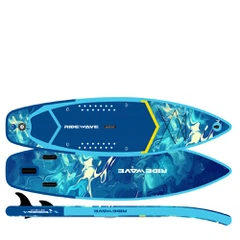

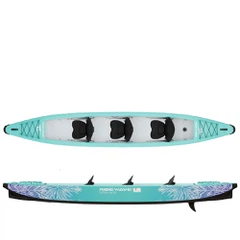
The inflatable paddle board industry has experienced tremendous growth over the past decade, driven by consumer demand for portable, versatile, and high-performance watercraft. Historically, PVC (polyvinyl chloride) has dominated the market due to its low cost, ease of production, and acceptable durability. While PVC remains a reliable option for entry-level and mid-range boards, it has limitations in terms of longevity, rigidity, and environmental impact. As paddlers, commercial operators, and OEM brands increasingly seek performance and sustainability, has emerged as a superior alternative that promises durability, eco-friendliness, and enhanced performance.
TPU's introduction into inflatable SUP manufacturing represents a significant evolution in material science. Its unique molecular structure offers a combination of elasticity, tensile strength, and abrasion resistance that PVC cannot match. These properties translate into boards that maintain structural integrity under high pressure, resist punctures and abrasions, and provide a more responsive and stable paddling experience. For professional-grade boards, rental fleets, and premium consumer markets, TPU is quickly becoming the material of choice. Its advantages are not limited to performance: TPU is also recyclable, compatible with cleaner manufacturing processes, and aligns with increasing global environmental standards, making it a forward-looking solution for the industry.
Understanding the differences between TPU and PVC is crucial for manufacturers, distributors, and end users. PVC has been used for decades because it is inexpensive and relatively easy to process. It can be laminated with drop-stitch cores to achieve acceptable rigidity, and its chemical stability allows for various coatings and textures. However, PVC has well-documented weaknesses. It can become brittle in cold weather, soften under heat, and degrade over long-term UV exposure. Additionally, the adhesive layers required to bond PVC sheets are prone to delamination, bubbling, and inconsistent bonding quality, which can compromise both performance and aesthetics.
TPU, by contrast, excels in multiple dimensions. Its and elasticity allow boards to handle higher pressures, often reaching up to 20–28 PSI without compromising stiffness. The material's makes it suitable for rocky rivers, coastal environments, and frequent use in commercial rental settings. Unlike PVC, TPU naturally bonds during heat-fusion lamination processes, eliminating many adhesive-related failures common in traditional construction. This leads to smoother surfaces, more consistent thickness, and better performance under heavy loads. Moreover, TPU maintains its mechanical properties in a wider temperature range, which ensures consistent performance in both hot and cold climates.
From an environmental perspective, TPU is a significant step forward. It is recyclable and compatible with solvent-free processing, reducing harmful emissions associated with PVC manufacturing. While PVC production often involves chlorine-containing compounds and adhesives that generate volatile organic compounds (VOCs), TPU offers a cleaner, greener alternative. For eco-conscious brands and distributors, this environmental advantage provides a marketing edge and aligns with the global trend toward sustainable outdoor products.
The performance of a paddle board is determined not only by its overall shape but also by the materials and construction techniques used. TPU's unique properties make it particularly suitable for advanced inflatable SUP designs. When combined with high-density drop-stitch cores, TPU forms a that reduces the risk of delamination, micro-bubbles, and weak seams-common issues in PVC boards. The thousands of polyester threads in the drop-stitch core work in synergy with TPU's elasticity, providing both rigidity and flexibility. This allows the board to maintain shape under pressure while offering a comfortable, responsive ride for paddlers of all skill levels.
Heat-fusion lamination with TPU also creates boards that are visually cleaner, with smooth surfaces and precise dimensions. Unlike PVC boards that rely on manual glue application, which can leave streaks or inconsistencies, TPU boards exhibit consistent thickness and symmetry across production batches. This consistency is especially important for and distributors who need predictable quality for multiple product lines and international shipping. With TPU, every board in a batch can meet the same high standards, reducing returns, warranty claims, and customer complaints.
On-Water Performance: Why TPU Feels Different
Paddlers quickly notice the difference in handling and responsiveness when using TPU-based boards. The combination of elasticity, rigidity, and lightweight construction allows TPU boards to glide more efficiently and track straighter in a variety of conditions. For touring, yoga, fishing, and family-use boards, this translates into more stable platforms, better energy efficiency, and improved comfort during longer sessions. The material's natural rebound ensures that boards flex subtly under load but return to their original shape without permanent deformation. This balance of stiffness and flexibility is particularly valuable for heavier paddlers or when carrying additional gear.
high-pressure environments. Whether inflating to the recommended PSI or occasionally exceeding standard pressure for racing or touring, TPU maintains integrity without compromising structure. Its resistance to abrasion and puncture further enhances safety and durability, ensuring boards withstand repeated exposure to rocks, docks, sand, and other challenging environments. For commercial users such as rental fleets or water sports schools, TPU boards provide predictable performance and reduced maintenance costs.
Environmental responsibility is increasingly important in the watersports industry. Consumers are not only looking for high-performance products but also for brands that minimize environmental impact. TPU meets these expectations by offering recyclability, lower production emissions, and longer product lifespan. Unlike PVC boards, which may require replacement after several seasons due to adhesive or surface degradation, TPU boards can remain in service for years, reducing waste and supporting sustainable practices.
solvent-free lamination and low-emission processing aligns with stricter environmental regulations and industry standards. Brands investing in TPU-based boards can demonstrate leadership in sustainability, appeal to eco-conscious buyers, and differentiate themselves in a competitive market. For OEM buyers and distributors, this also translates into tangible business advantages, including reduced returns, fewer warranty claims, and stronger brand reputation.
TPU boards are not only a technical upgrade for consumers-they also offer clear benefits for business buyers. For OEM manufacturers, TPU allows for , reducing variability caused by manual PVC gluing. For distributors, lighter TPU boards mean lower shipping costs and easier handling in warehouses. Rental operators benefit from enhanced durability and reduced maintenance, increasing uptime and profitability. Across all channels, TPU supports premium product positioning, allowing brands to justify higher price points without compromising accessibility for mid-range customers.
By incorporating TPU into product lines, businesses can address multiple market segments simultaneously: high-end paddlers seeking performance and longevity, eco-conscious consumers looking for sustainable products, and commercial operators needing dependable boards for frequent use. TPU provides a foundation for scalable, repeatable, and premium-quality SUP products, supporting both brand growth and operational efficiency.
While TPU offers numerous advantages, there are considerations for adoption. TPU is more expensive than PVC, both in raw materials and in processing. Heat-fusion lamination requires precision equipment and experienced manufacturing staff. Not all factories currently have the expertise or capacity to produce high-quality TPU boards consistently. However, as adoption increases and production scales, costs are expected to decline, making TPU more accessible across market segments. The initial investment is typically offset by longer lifespan, reduced maintenance, and higher customer satisfaction.
The Future of High-Performance Inflatable SUPs
TPU is clearly shaping the future of inflatable paddle boards. Its combination of eco-friendly production, ultra-tough durability, and superior riding performance positions it as the next-generation standard for the industry. As consumer expectations evolve and environmental regulations tighten, TPU boards are likely to become the preferred choice for premium and commercial markets. Manufacturers, OEMs, and distributors integrating TPU into their product lines can anticipate stronger brand differentiation, reduced operational risk, and enhanced customer loyalty.
The technology also supports ongoing innovation. TPU's compatibility with advanced drop-stitch designs, multi-density cores, and heat-fusion techniques opens the door for new board shapes, lighter constructions, and higher performance without sacrificing durability. Boards that were once limited by PVC constraints can now be engineered to meet specialized requirements, from adventure touring to racing and professional water sports. In this sense, TPU does more than improve current designs-it enables entirely new possibilities for the future of inflatable SUPs.
TPU material is revolutionizing inflatable paddle board construction. By combining strength, elasticity, environmental sustainability, and superior riding performance, TPU sets a new benchmark for high-performance iSUPs. Whether for recreational paddlers, professional users, rental fleets, or OEM brands, TPU boards offer longer lifespan, better durability, and a more enjoyable on-water experience. As the SUP industry continues to grow and evolve, TPU is poised to become the material standard for the next generation of eco-friendly, ultra-tough, and high-performance inflatable paddle boards.